
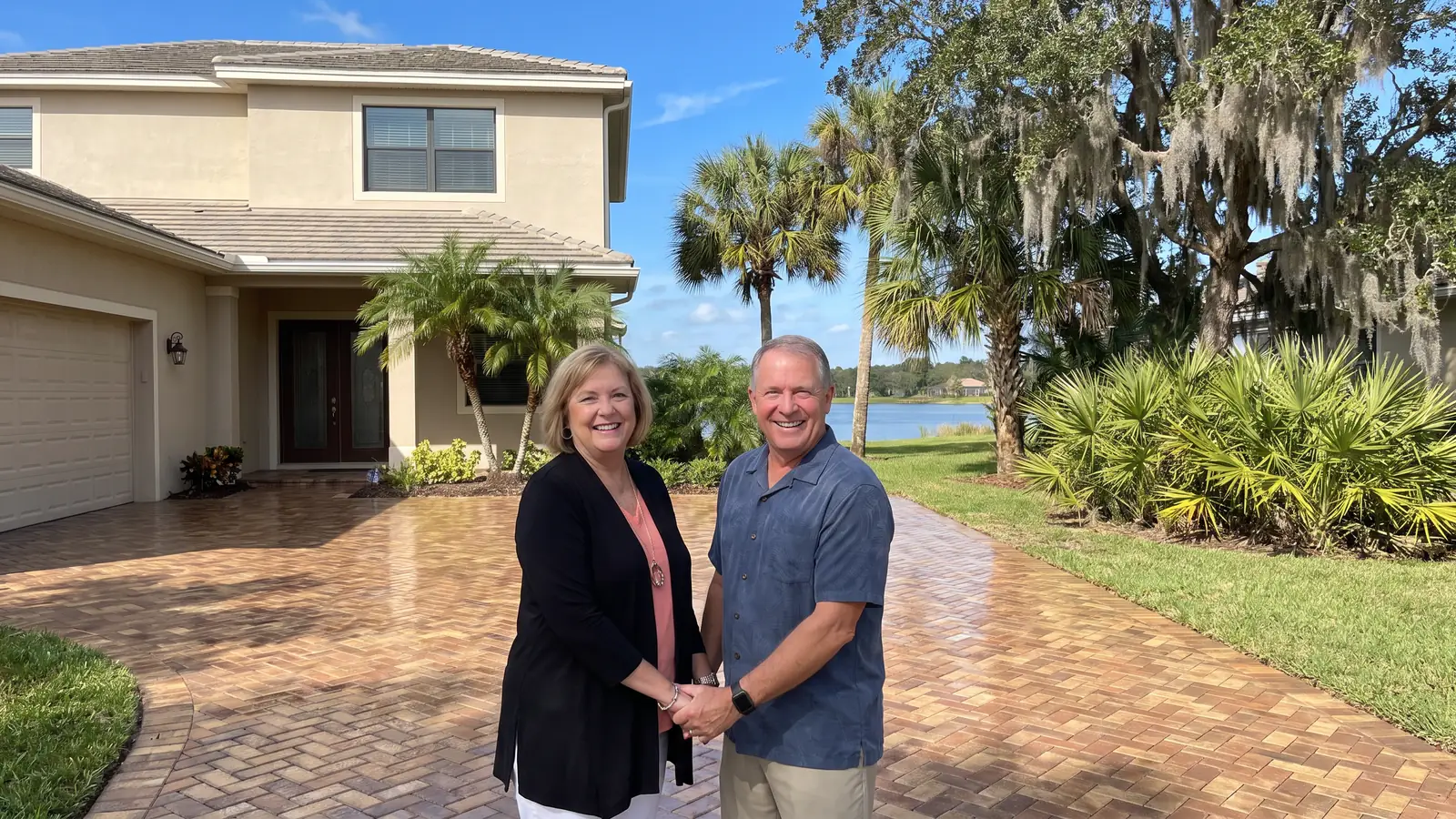
Richer color and steady footing by the pool
Pool Deck Paver Sealing in St. Cloud, FL
Call (689) 329-1673 for a free estimate to seal the pavers around your pool.
- Brings out deeper paver color
- Fresh joint sand helps lock pavers in place
- Gives weeds less room to grow
- Makes the surface easier to keep clean
- Free estimate, no obligation
Request a Free Estimate
Free, no obligation.
Can a contractor seal my St. Cloud pool deck, and how soon?
A local contractor seals pool deck pavers in St. Cloud, FL, and a reply reaches you within 1 business day, often well before that. The look at your deck and the price are free, and you can say no afterward. To get started, call (689) 329-1673.
Picture the deck at the end of a long summer, with the color gone flat, a gray film in the corners and sand missing from the joints near the water line. Premier Coatings, a Florida sealing company, says sealing slows the damage that UV light, chlorine and rain do to a deck and leaves a smoother surface underfoot. A contractor can check how yours is holding up, so send the free estimate form.
Does a pool deck wear differently from the rest of my pavers?
Yes, because the water never stops moving across it. Splashes, rain and wet feet keep a pool deck damp most days, and Kennelly Paver and Restoration says humidity encourages algae and mold on unsealed pavers. Algae on a deck is more than a looks problem, since Western Interlock notes that moss and algae in shaded spots create slip hazards. To have the damp corners looked at, call (689) 329-1673.
Chlorine, rain and sun
Premier Coatings lists three things a sealed deck slows down: UV light, chlorine and rainfall. St. Cloud has the hot, humid summers of a humid subtropical climate, according to Wikipedia, so the deck sees all three for months at a stretch. A coat is the layer that takes that wear in place of the paver. For a plan sized to your deck, send the free estimate form.
If the pool uses salt
Direct Colors explains that salt crystals form as splashed water dries, and the jagged crystals slowly abrade the sealer. It prefers a satin acrylic for salt decks and says most acrylic-sealed pool decks need another coat every two to three years. Mention the type of pool when you call (689) 329-1673, so the contractor can price the right product.
Which towns around St. Cloud can a pool deck contractor reach?
Free pool deck estimates cover St. Cloud and the places listed below across Osceola, Orange and Polk counties. Not sure whether your street counts? Call (689) 329-1673.
How do I keep a sealed pool deck from getting slippery?
The finish matters more than the brand. Unilock warns that high gloss sealers may be slippery, especially when wet, and calls matte the safer choice. Premier Coatings says matte, satin and gloss are all available for pool decks, so ask to see a sample of each when you send the free estimate form.
A grip additive in the last coat
Concrete Network says to pick a sealer made to resist slipping or to add a non-slip additive, and Direct Colors puts that additive in the final coat only. Castle Clean and Seal calls it a small extra cost on travertine pool areas. Ask whether the quote includes it, and call (689) 329-1673 if the answer is unclear.
Gloss, satin or matte by the water
Acrylic sealers give a glossy sheen, Concrete Network says, while penetrating sealers leave no film and suit a natural look. A deck that stays wet with bare feet on it leans toward satin or matte. A wet look can still suit a dry entry walk next to it. To compare the two for your layout, send the free estimate form.
What is the pool deck sealing process, step by step?
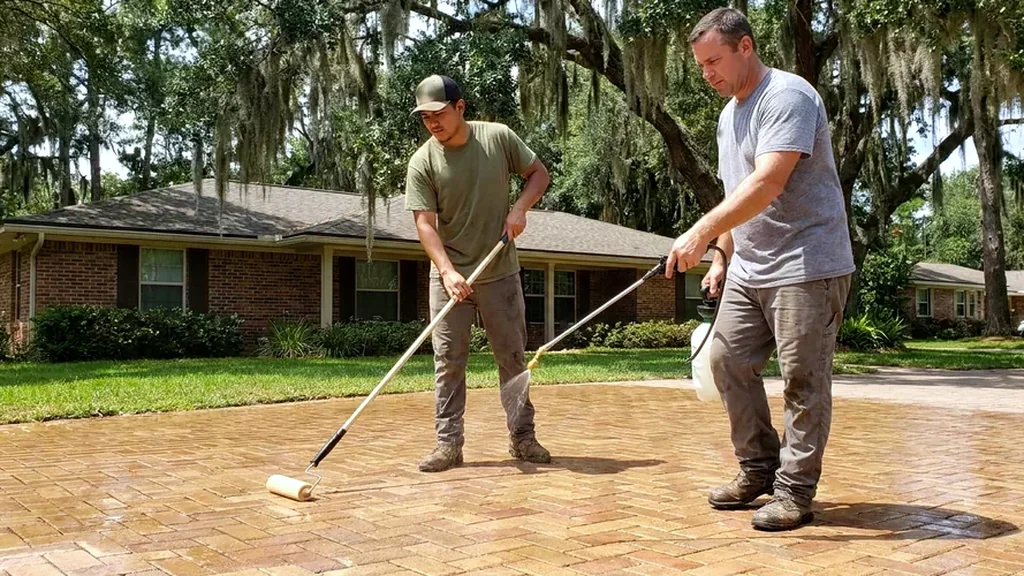
A pool deck job follows the same order as any paver job, with extra care for water and grip. Here is the sequence a contractor should be able to walk you through. To hear it for your deck, call (689) 329-1673.
1. Walk the deck
The contractor measures the deck, notes loose or sunken pavers and old sealer, and checks where water stands after rain.
2. Treat and rinse
Algae and mold are treated first, then the surface is washed. Sealing over dirty pavers traps stains, Baha Soft Wash notes on its St. Cloud page.
3. Refill the joints
Joint sand is refilled after the deck dries. Premier Coatings uses a silica blend that supports drainage and discourages weeds and insects.
4. Check for hidden moisture
Lurvey's warns that a surface can look dry on top while holding moisture below, so the deck gets the time it needs.
5. Thin coats, then grip
Concrete Network describes a thin first coat and a second coat in the opposite direction. The grip additive goes in the last one.
6. Walk it with you
The contractor reviews the finish with you and tells you how long feet, furniture and swimmers stay off.
What does pool deck paver sealing cost in St. Cloud?
Castle Clean and Seal lists pool decks at $1.75 to $3.00 per square foot across Central Florida, and says a 400 square foot deck lands near $2.50. The table below applies that range to four deck sizes, and it adds the cost of stripping a failed coat as Castle lists it. Your quote will reflect your own deck. To get one, send the free estimate form.
Several things move the price. Orlando Power Washing Service says size, material, surface condition, access and the sealer chosen all count. A deck with algae in every joint or sunken pavers near the coping costs more than a clean one. Castle also lists a $1,000 project minimum, so a small deck may be quoted at that floor. To compare a number you already hold, call (689) 329-1673.
| Deck area | Clean, sand and seal at $1.75 to $3.00 | With a failed coat stripped first |
|---|---|---|
| 300 sq ft | $525 to $900 | $1,025 to $1,900 |
| 400 sq ft | $700 to $1,200 | $1,200 to $2,200 |
| 600 sq ft | $1,050 to $1,800 | $1,550 to $2,800 |
| 800 sq ft | $1,400 to $2,400 | $1,900 to $3,400 |
The $1.75 to $3.00 per square foot rate and the $500 to $1,000 stripping add-on come from Castle Clean and Seal's Central Florida price guide, 2026. The add-on is listed as $500 to $1,000 or more, so a heavy build-up can cost extra. Kennelly Paver and Restoration lists stripping and resealing together at $3.50 to $5.00 per square foot. A quote far below these figures deserves a question, because Kennelly calls a $0.40 offer a red flag.
How long should people and furniture stay off a sealed pool deck?
Castle Clean and Seal gives 4 to 6 hours for feet, about 24 hours for furniture and 48 hours for cars on a driveway. It adds that humid, shaded or rainy conditions stretch those times. Kennelly Paver and Restoration reports water-based sealer is walkable in 3 to 4 hours and cured in 24 to 48. Ask the contractor for the times that match the product, and plan the first swim around them. To pick a day, call (689) 329-1673.
Will the screen, the shade and the sprinklers change how the work goes?
They can. Unilock says pavers in shade may need about 24 hours to dry after cleaning, while warm sun dries them in a few hours, so a screened lanai can slow the schedule. Lurvey's lists shade, humidity and porosity as drying factors. A contractor who checks for moisture before the coat avoids cloudy spots. For a visit to check yours, send the free estimate form.
Sprinkler heads near the deck
Toho Water Authority allows two watering days a week, set by house number, and Unilock asks homeowners to shut automatic sprinklers off around fresh sealer because water can leave white marks. Tell the contractor which zones spray toward the deck and which day your house gets. Share the house number when you call (689) 329-1673.
Protecting plants, glass and the water
Lurvey's says sealer should be kept off nearby plants, siding, glass, furniture and metal. Ask how the contractor masks the screen frame, pool edge and landscaping, and how a rinse stays out of the pool. A clear answer in the quote is a good sign. For a talk about it, send the free estimate form.
When should a pool deck be sealed again?
Most Florida decks come due every two to three years, according to Premier Coatings, and Concrete Network allows two to five. Kennelly Paver and Restoration says shade can stretch that to nearly four years. Premier lists dull color, standing water and shifting pavers as reasons to call sooner. To keep track, ask for the date of your coat and the product used, and send the free estimate form.
A quick check can tell you. Concrete Network says water that soaks in instead of beading means the deck is ready for another coat. Western Interlock times the beading, and treats five minutes or more as a coat still working. A contractor can run the same check on your deck. To book one, call (689) 329-1673.
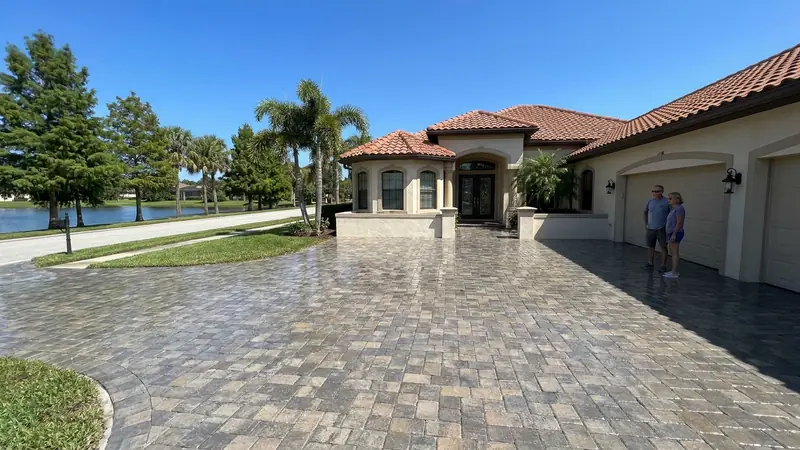
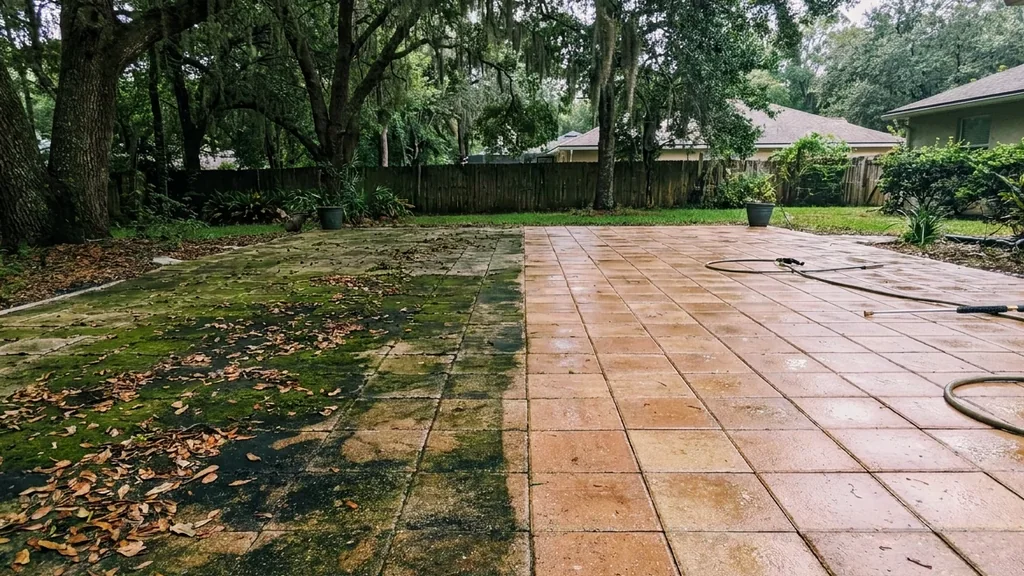
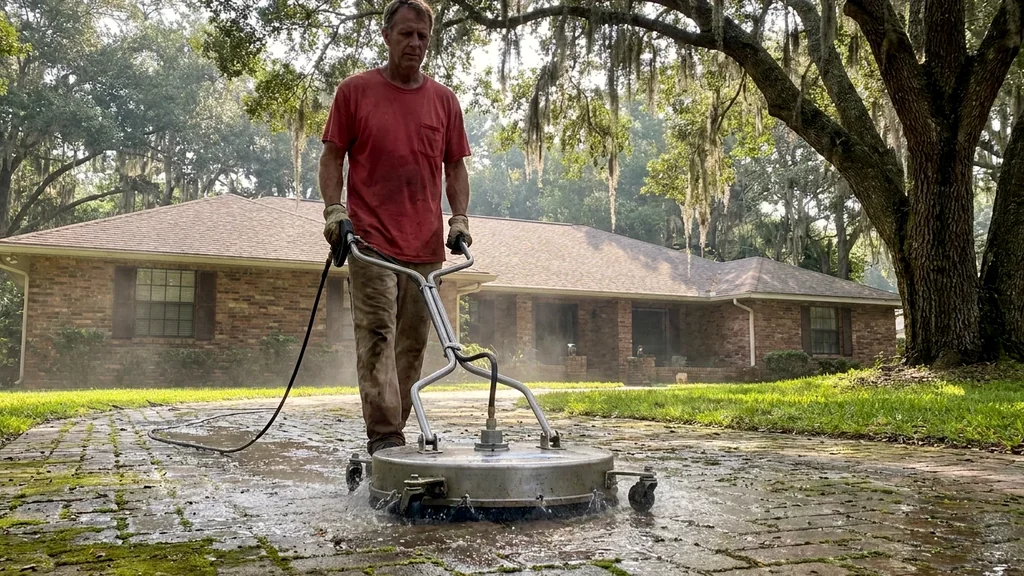
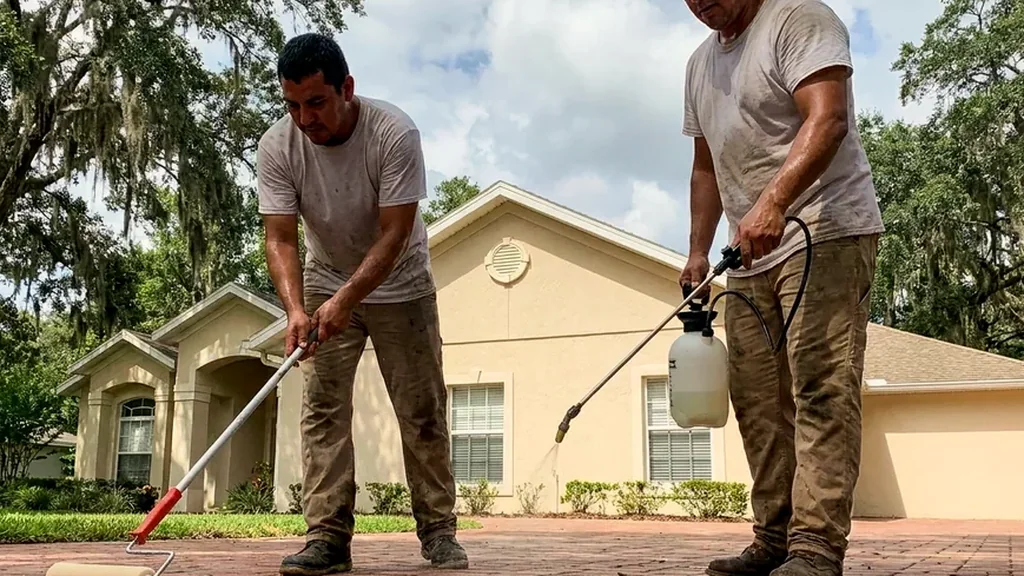
What do sealed pool decks look like around St. Cloud?
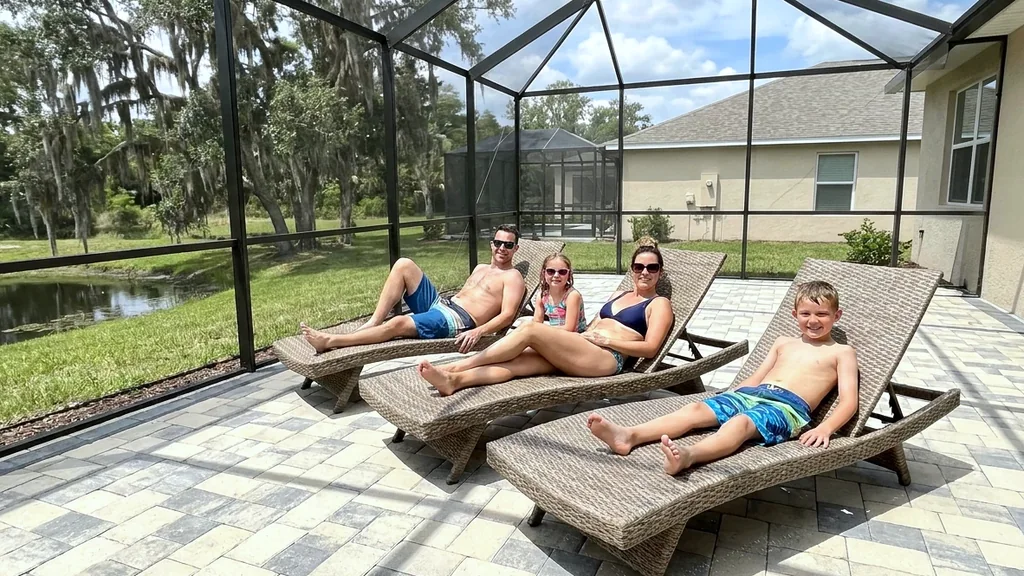
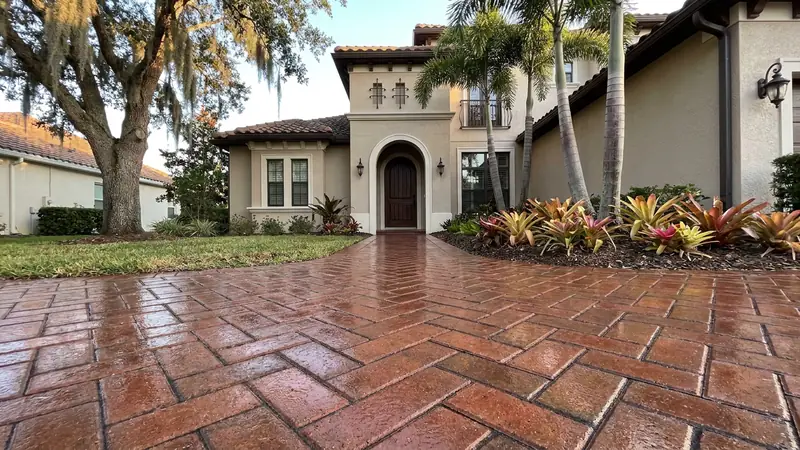
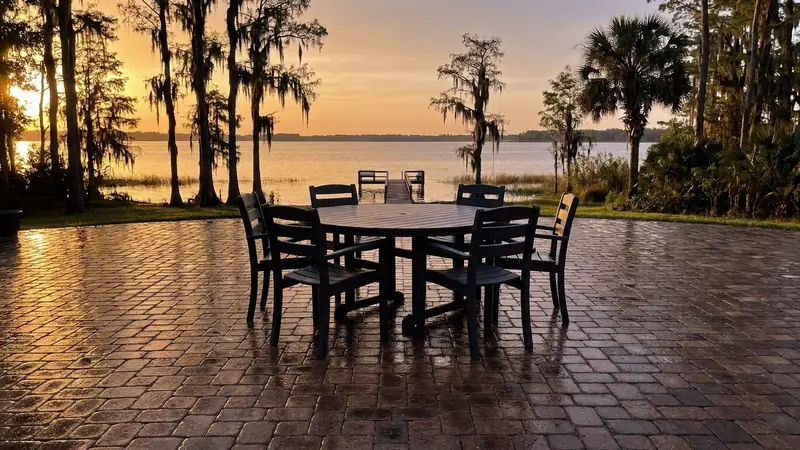
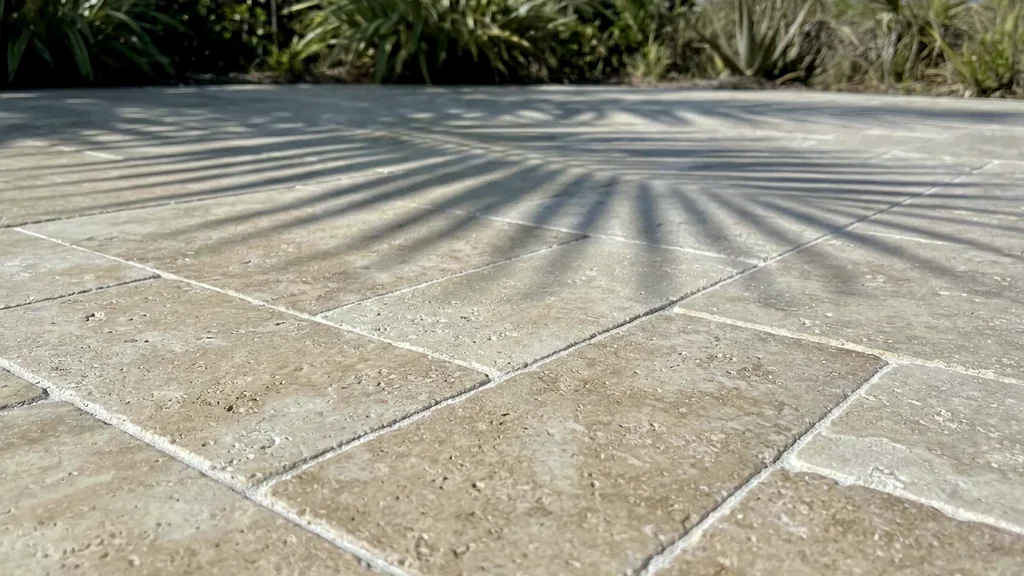
What should I ask a contractor before pool deck sealing?
A good quote answers these before you sign. Castle Clean and Seal suggests asking for the sealer brand and its product data sheet, and says no-name sealers can fail within 6 to 12 months in Florida sun. To ask these questions of a local contractor, call (689) 329-1673.
Which sealer and which finish?
Water-based is the standard for Florida humidity, Castle Clean and Seal says, and the brand should be named in writing.
Is a grip additive included?
Direct Colors puts it in the final coat, and the quote should say whether it is part of the price.
How many coats?
Concrete Network describes two thin coats. Castle uses two to three. Ask why the contractor picked a number.
What is the stay-off schedule?
Feet, furniture and swimmers each get a time, and the product decides it.
How is the pool protected?
Ask about masking, runoff and where the rinse water goes.
What happens if it rains?
Unilock asks for 24 to 48 hours of clear skies, so a rain date should be named up front.
Frequently Asked Questions
Should pool deck pavers be sealed?
Often yes. Premier Coatings, a Florida sealing company, says a coat slows the damage UV light, chlorine and rain do to a deck, and Direct Colors says salt crystals from splashed water wear a bare surface down. Sealing is a choice, not a rule, and it brings a repeat job every two to five years. A contractor can tell you what your deck needs.
How much does it cost to seal a pool deck?
Castle Clean and Seal lists Central Florida pool decks at $1.75 to $3.00 per square foot, with a 400 square foot deck near $2.50. That works out to about $700 to $1,200 for 400 square feet at the full range. Stripping a failed coat adds $500 to $1,000 or more, and Castle also lists a $1,000 project minimum, so a small deck may be quoted at that floor.
How much to clean and seal pavers?
The published Central Florida range for the whole clean, sand and seal is $1.50 to $3.00 per square foot, and this site uses it for St. Cloud. Pool decks sit toward the upper half, since the Castle figure for them is $1.75 to $3.00. A plain wash costs less, at $0.15 to $0.75 per square foot according to Kennelly Paver and Restoration.
How long does paver sealing last in Florida?
Plan on two to five years, and let the deck set the date. Premier Coatings says most Florida pool decks need cleaning and resealing every two to three years, Concrete Network says two to five, and Kennelly Paver and Restoration says a shaded pool deck can last close to four. Water that soaks in instead of beading is the signal to call.
Is there a downside to sealing pavers?
There are three. High gloss can turn slippery when wet, a coat laid over trapped moisture can cloud, and the job repeats every few years. Lurvey's adds that enhancing and gloss sealers make differences between pavers more noticeable. A matte or satin finish with a grip additive answers the first, and a dry deck and a test patch answer the second.
Will my pool deck stay slip resistant after it is sealed?
It can, if the finish is chosen with that goal. Direct Colors prefers satin because gloss gets slippery when wet, and it puts a traction additive in the final coat. Castle Clean and Seal recommends a non-slip additive for travertine pool areas. Tell the contractor how often bare feet and wet towels cross the deck.
Do I have to cover the pool or move the furniture before the deck is sealed?
Ask the contractor how the water, screens, plants and furniture will be protected. Lurvey's says to shield nearby plants, glass, metal and furniture from runoff and overspray, and Castle Clean and Seal says furniture should stay off for about 24 hours after the coat. A contractor who plans for this will say so in the quote.
How soon can my family use the pool deck after sealing?
Feet are usually fine in 4 to 6 hours, according to Castle Clean and Seal, and longer if the air is humid or the deck is shaded. Kennelly Paver and Restoration puts water-based sealer at 3 to 4 hours to walk on and 24 to 48 to cure. Unilock asks for up to 48 hours of dry weather for the coat to cure.
Ready to sort out the pavers around your pool?
Send your street and the size of the deck, and a contractor replies within 1 business day, usually much sooner.
Free, no obligation