
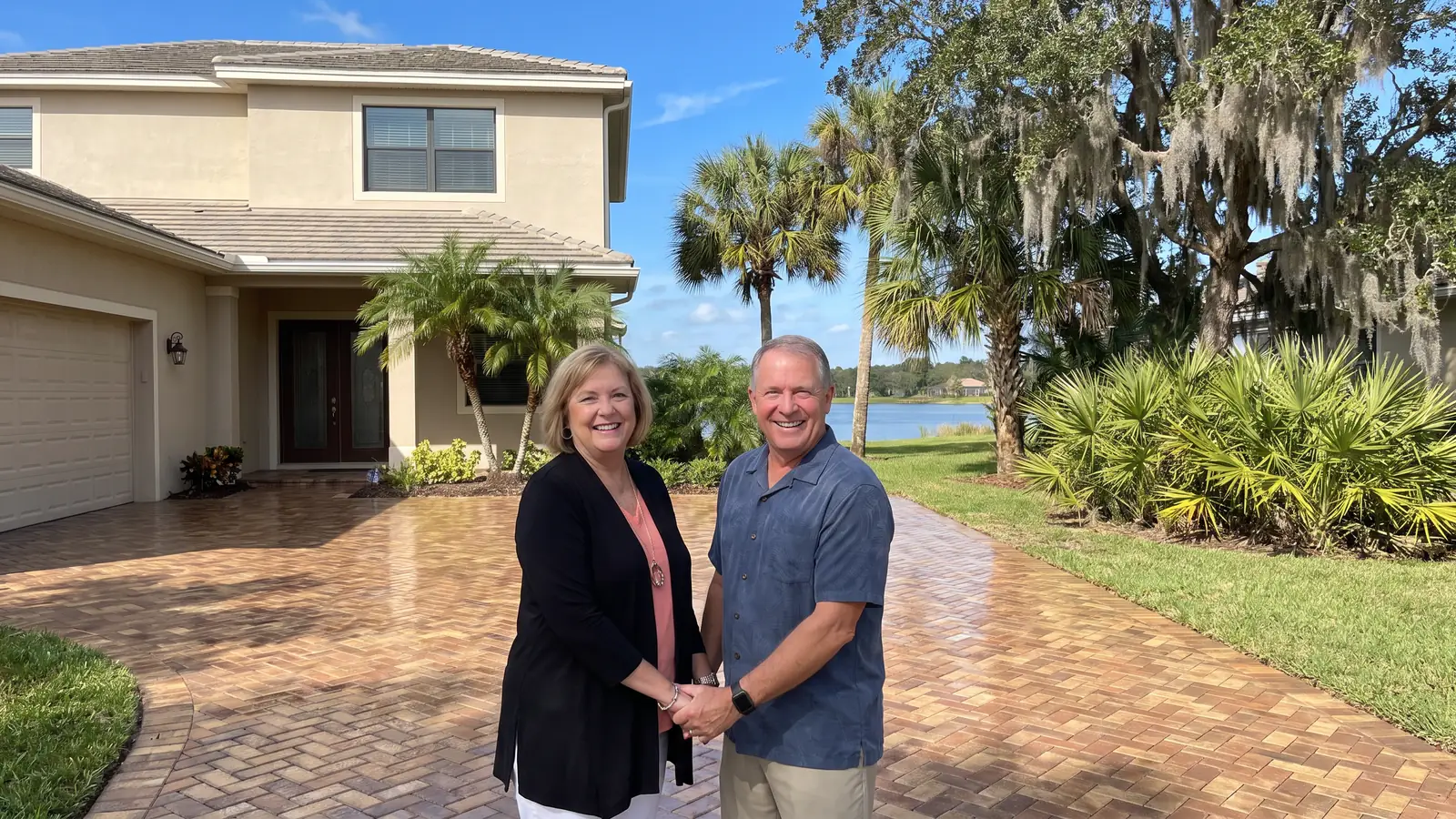
Protect clay brick without trapping moisture
Brick Paver Sealing in St. Cloud, FL
Call (689) 329-1673 for a free estimate on sealing your brick pavers.
- Brings out deeper paver color
- Fresh joint sand helps lock pavers in place
- Gives weeds less room to grow
- Makes the surface easier to keep clean
- Free estimate, no obligation
Request a Free Estimate
Free, no obligation.
Is there a local contractor for brick paver sealing in St. Cloud?
Yes, a local contractor seals brick pavers in St. Cloud, FL, and the reply comes within 1 business day, often within hours. The look at the brick and the quote are free, and nothing obliges you to book afterward. To begin, call (689) 329-1673.
Clay brick is not the same as a concrete paver, and the sealer should not be the same either. Lurvey's says clay pavers vary in composition, density and porosity, and that product choice should follow the surface. A contractor can check yours in person, explain what the surface can take and name the sealer in writing, so send the free estimate form.
Does brick need a different sealer from concrete pavers?
Usually yes, and this is where jobs go wrong. A brick-industry FAQ says brick is naturally breathable and that the wrong sealant can trap moisture, which leads to efflorescence, spalling or surface damage. It advises breathable penetrating sealers, such as silane or siloxane products, and says to avoid film-forming acrylics or urethanes outdoors. To ask which your contractor uses, call (689) 329-1673.
Water-based or solvent-based
Kennelly Paver and Restoration says brick pavers get water-based sealers only. Castle Clean and Seal calls water-based the standard for Florida humidity, because moisture can still move through the surface. Ask for the brand and the data sheet, which Castle says any legitimate company can hand over. When you send the free estimate form, add the question.
Natural look or wet look
Lurvey's lists a natural penetrating sealer and a wet look stabilizing sealer as two options sold for clay. The wet look deepens the red and brown tones and shows more shine. Enhancing and gloss sealers can make color variation between bricks more noticeable. Ask for a sample on a spare corner, and call (689) 329-1673 to set it up.
Which St. Cloud-area towns can a brick paver contractor reach?
A free look at brick pavers is available in St. Cloud and across the places listed below in Osceola, Orange and Polk counties. Brick on a street that is not listed can still be reached through (689) 329-1673.
What is the brick paver sealing process, step by step?
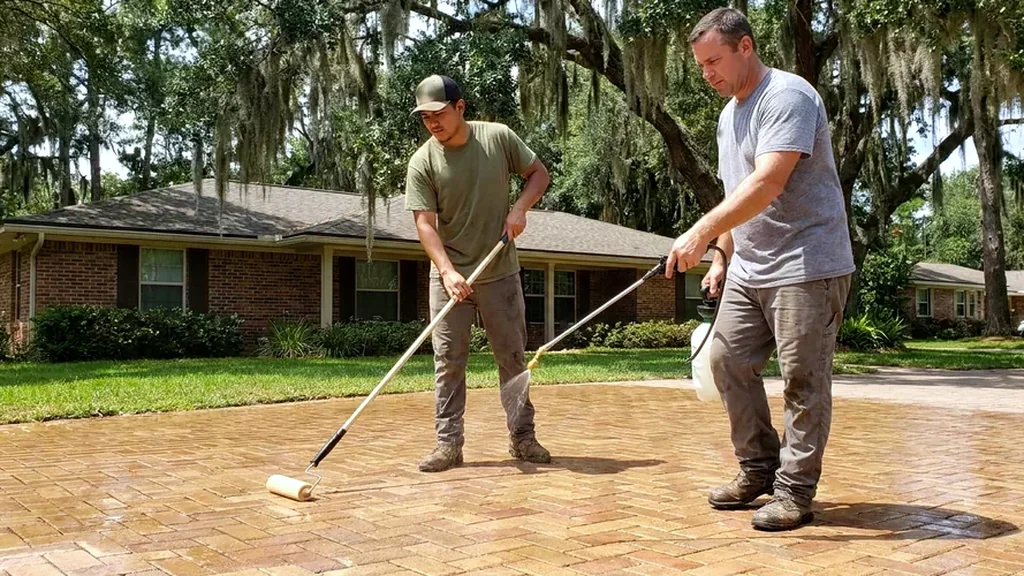
Brick takes a gentler touch at every stage, and the order matters more than the product. A contractor should be able to describe each step for your surface. To hear the plan for yours, call (689) 329-1673.
1. Identify the brick
The contractor notes whether the pavers are clay or concrete, what shape the joints are in and whether any old coat is present.
2. Check for efflorescence
Lurvey's describes a white or gray haze from salts. Sealing over it traps it, and the brick-industry FAQ says to brush it off dry first.
3. Clean gently
Pine Hall Brick says some brick cannot be wet cleaned, and Unilock warns that wire brushes leave rusting particles.
4. Refill the joints
Sand goes in after the brick dries, and the joint line is checked for low spots.
5. Test, then coat
Lurvey's and the brick-industry FAQ both say to test in a hidden spot, because sealers can darken brick or change sheen.
6. Walk it with you
The contractor reviews the finish with you and explains the stay-off times.
What does brick paver sealing cost in St. Cloud?
No page opened for this one gives a separate price for brick. Castle Clean and Seal names brick as a surface it handles but lists no brick rate, and Kennelly Paver and Restoration gives the general figures. So the table below is built from published pieces: a wash, a standard clean and seal, and a strip and reseal. Your quote will reflect your brick. To get one, send the free estimate form.
Watch for quotes at either extreme. Kennelly calls a $0.40 per square foot offer a red flag and $10 per square foot for standard brick sealing a likely installer price. Pine Hall Brick prices pavers per thousand or per square foot, so a per-square-foot figure for brick may be for the material, not for sealing. To check a number you hold, call (689) 329-1673.
| Brick area | Wash only at $0.15 to $0.75 | Clean, sand and seal at $1.50 to $3.00 | Strip and reseal at $3.50 to $5.00 |
|---|---|---|---|
| 300 sq ft | $45 to $225 | $450 to $900 | $1,050 to $1,500 |
| 600 sq ft | $90 to $450 | $900 to $1,800 | $2,100 to $3,000 |
| 900 sq ft | $135 to $675 | $1,350 to $2,700 | $3,150 to $4,500 |
Wash figures are from Kennelly Paver and Restoration's Orlando price page ($0.15 to $0.75 for a standard pressure wash), and so is the $3.50 to $5.00 stripping and resealing range. The $1.50 to $3.00 clean, sand and seal range is the Central Florida figure Castle Clean and Seal published for 2026. No source opened gave a brick-specific rate, so these are the general paver figures applied to brick.
What should I know about efflorescence on new or older brick?
Efflorescence is a white or gray haze, and Lurvey's says it forms when moisture carries soluble salts to the surface. It is usually not structural, though it does change the look. Unilock says to wait until it is gone, typically two to three months and sometimes up to a year, before any sealer goes on. To have a hazy patch looked at, send the free estimate form.
Why sealing over it backfires
Sealing over efflorescence traps it beneath the finish, Lurvey's warns, and the brick-industry FAQ says to brush it off dry before using water. The brick-industry FAQ also says sealers can darken brick, so ask which cleaner is used and where it gets tested first. For a quote with that spelled out, call (689) 329-1673.
When do brick pavers here need another coat?
Expect two to five years. Kennelly Paver and Restoration says sealer lasts about two to four years, Unilock says three to five and the brick-industry FAQ says sealers wear over time depending on exposure. Kennelly suggests a wash every 12 to 15 months. Ask the contractor to look at the surface every spring, and call (689) 329-1673 to book one.
Will humidity and shade affect brick pavers here?
Yes, because damp air feeds algae on any unsealed surface. Kennelly Paver and Restoration says Orlando gets over 50 inches of rain a year and that humidity promotes algae and mold. St. Cloud has hot, humid summers, according to Wikipedia, so a shaded brick walk stays damp for long stretches. The brick-industry FAQ points to breathable penetrating sealers for brick. To discuss it for your walk, send the free estimate form.
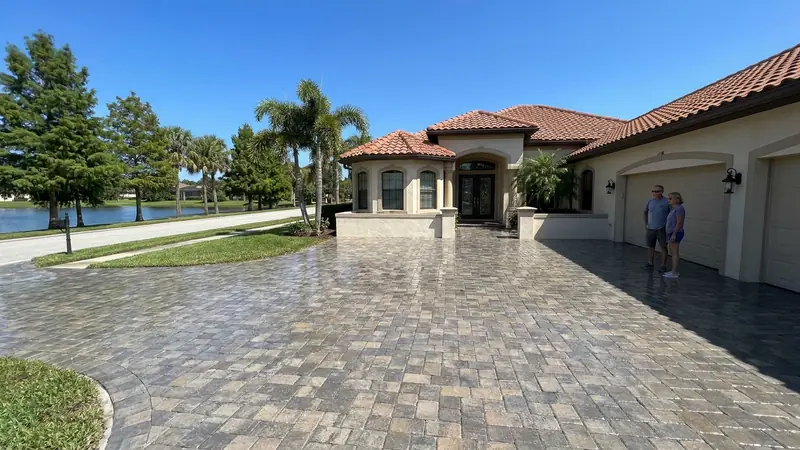
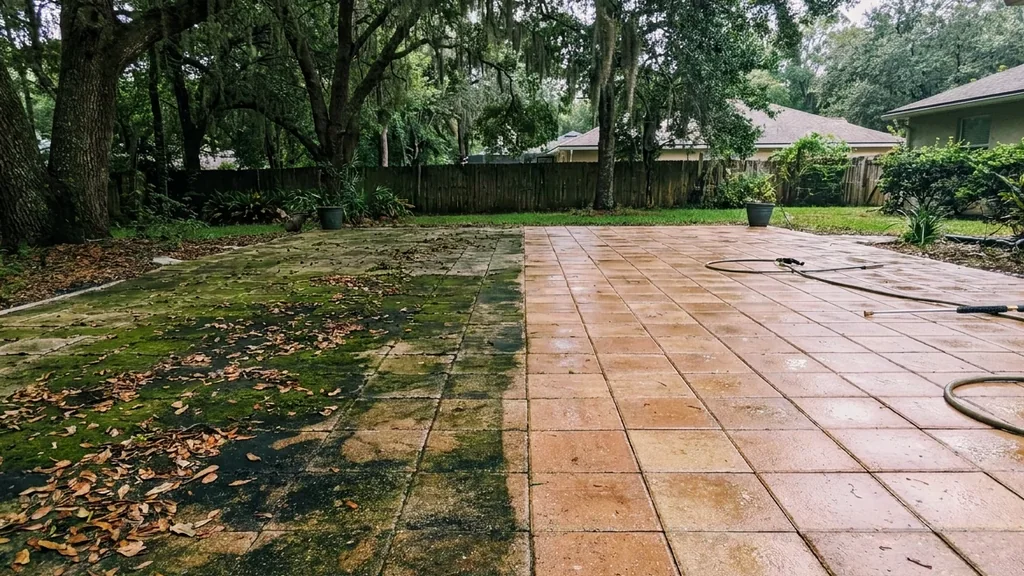
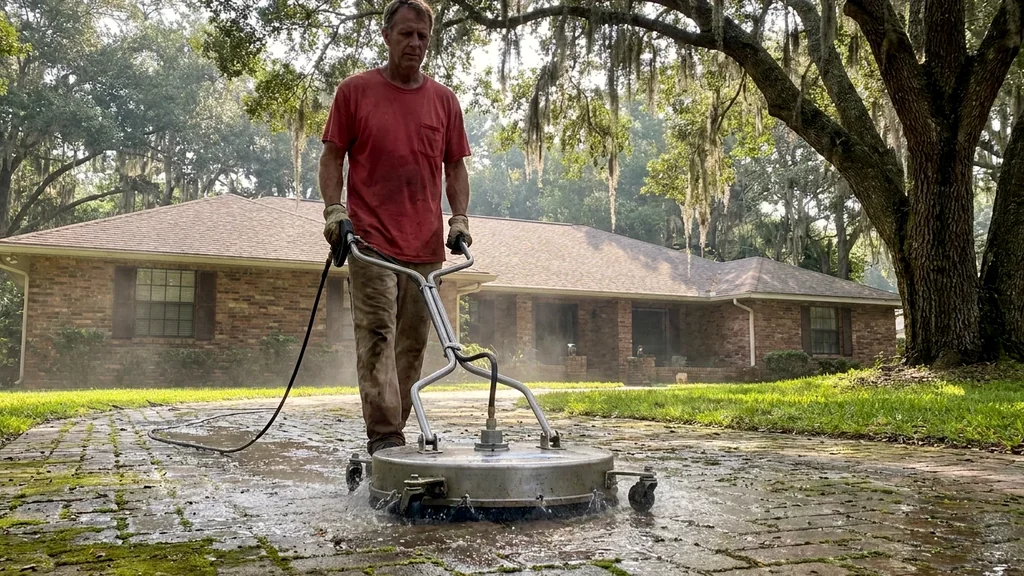
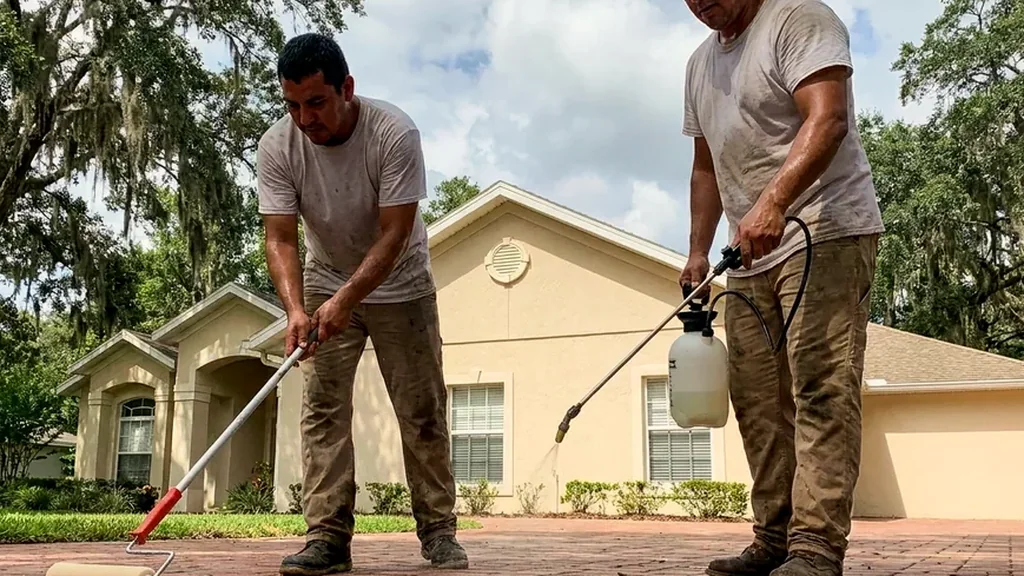
What do sealed brick pavers look like around St. Cloud?
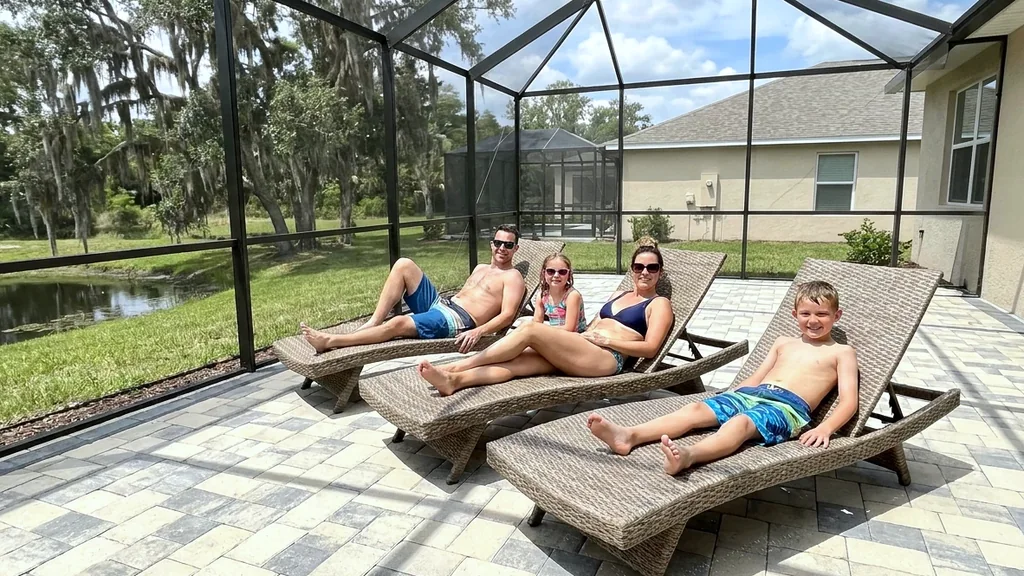
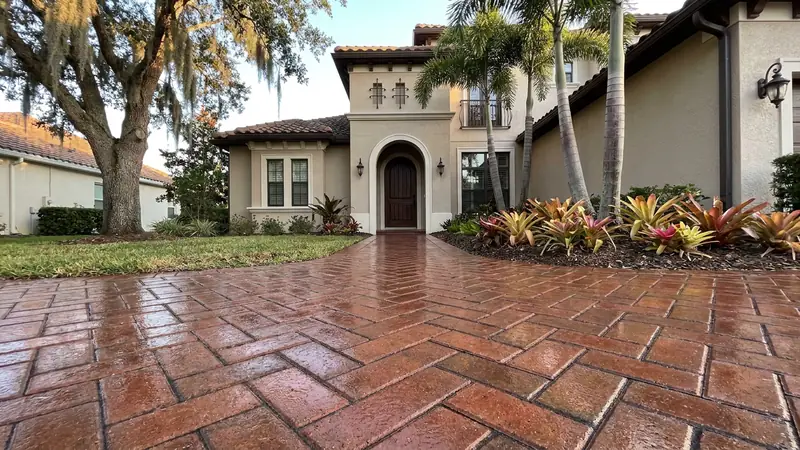
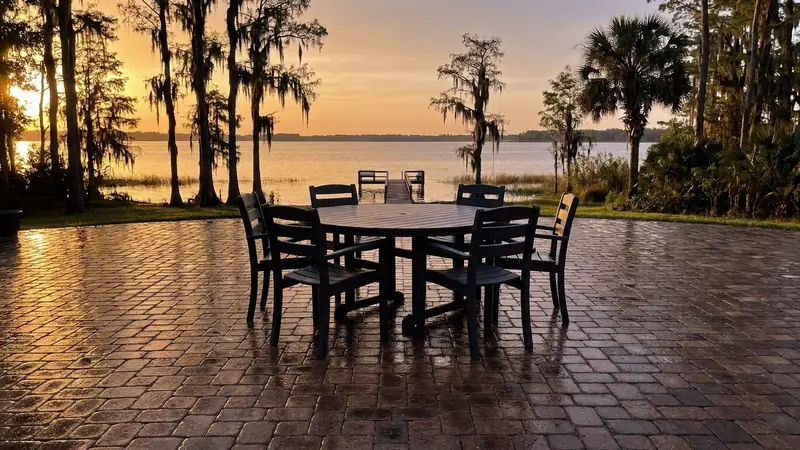
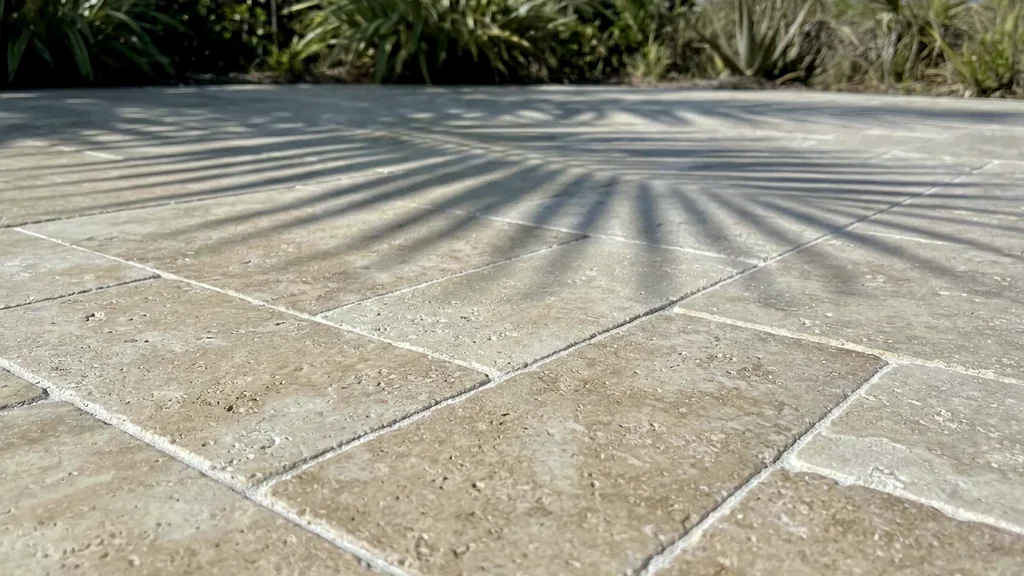
What should I ask before my brick pavers are sealed?
Use this short list when you compare quotes. Castle Clean and Seal advises asking for the brand and data sheet and says low-quality products turn white and peel. To put these to a local contractor, call (689) 329-1673.
Is the sealer breathable?
The brick-industry FAQ says to use only breathable penetrating sealers outdoors. Ask for that answer in writing.
Is the sealer water-based?
Kennelly says brick pavers use water-based sealers only.
Will you test a hidden spot?
Sealers can darken brick or change sheen, so a test patch is worth the extra hour.
What is done about efflorescence?
Ask for a dry brush first, as the brick-industry FAQ suggests, and a delay if the haze is still showing.
Is there a price for brick?
No source lists one, so ask the contractor to show how the number was built.
How long until the patio is usable?
Castle gives 4 to 6 hours for feet and about 24 hours for furniture.
Frequently Asked Questions
What is used to seal brick pavers?
A water-based sealer, according to Kennelly Paver and Restoration, which uses water-based products only on brick pavers. A brick-industry FAQ goes further and says to use only breathable penetrating sealers such as silane or siloxane, and no acrylic or urethane films outdoors. Lurvey's names two products as suited to clay, one natural look and one wet look. Ask the contractor for the product data sheet.
How long does paver sealing last in Florida?
Two to five years is the usual range. Kennelly Paver and Restoration says sealer lasts about two to four years and suggests a wash every 12 to 15 months, and Unilock says three to five depending on traffic and sun. Brick that is breathable and sealed with a penetrating product may follow a different schedule, so ask the contractor what to expect.
How much to clean and seal pavers?
The published Central Florida range for the whole clean, sand and seal is $1.50 to $3.00 per square foot. No source opened for this page lists a separate brick price. Castle Clean and Seal names brick as a surface but gives no brick figure, and Kennelly calls $10 per square foot for standard brick sealing a likely installer price.
Is it necessary to seal pavers in Florida?
No, pavers work without a coat. A brick-industry FAQ says sealant is usually not needed on exterior brick and is often discouraged, because the wrong one traps moisture. In a humid place like St. Cloud, a penetrating sealer can still slow staining. A contractor can say whether your brick needs one.
What do professionals use to seal pavers?
It depends on the paver. Castle Clean and Seal calls water-based sealer the standard for Florida humidity and says limestone needs a penetrating product. Lurvey's lists penetrating, film-forming, wet look and enhancing sealers. For clay brick, ask for a breathable product and a written data sheet.
Should brick pavers be cleaned before sealing?
Always. A brick-industry FAQ says never to seal over moisture, dirt or efflorescence, because they become locked in, and Baha Soft Wash says sealing over dirty pavers traps stains. Pine Hall Brick adds that some brick cannot be wet cleaned. Tell the contractor if you know who made yours.
Will sealer change the color of my brick pavers?
It can. Lurvey's says enhancing and gloss sealers deepen color and make variations between pavers more noticeable, and the brick-industry FAQ says sealers can darken brick or change sheen. A test patch in a hidden corner, left to dry fully, shows the result before the whole patio gets a coat.
Can brick pavers be sealed right after they are laid?
Not usually. Unilock says to wait until efflorescence is gone, typically two to three months and sometimes up to a year. The brick-industry FAQ says to wait at least 30 days and ideally up to a year. Sealing early locks moisture and salts in.
Have a brick surface that needs a plan?
Share your street and a few photos or sizes, and a local contractor replies within 1 business day, usually much sooner.
Free, no obligation